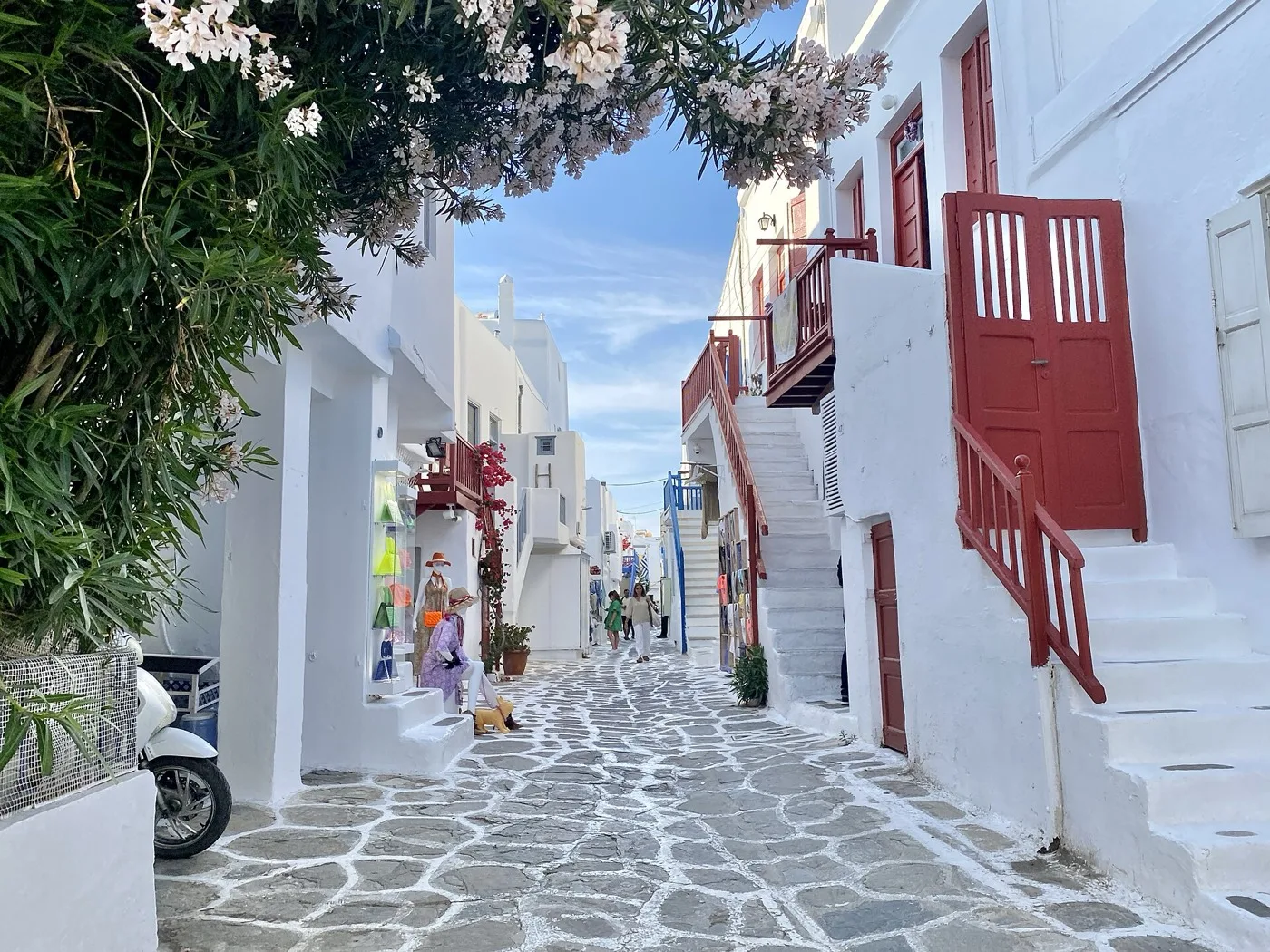
Osnovne i praktične informacije
Dosadna stranica koju ćete rado pročitati.
- Emergency 112
- Tourist Police 1571
- Euro · cards widely accepted
- Plugs C/F, 230 V
Numbers to save before you fly
All are free from any phone, 24/7. In a life-threatening situation call 112 — operators speak English. Sources: Greek national emergency numbers; Hellenic Police (astynomia.gr); Mykonos Health Center (hc.mykonos.gr), checked October 2026.
Passports, visas and the new EU border system
Greece is in the Schengen area. EU and Schengen citizens need only an ID card or passport. Many other nationalities — including the UK, the US, Canada, Australia, the UAE and Israel — can visit visa-free for up to 90 days in any 180-day period; others need a Schengen visa from a Greek consulate before travel.
EES — live since April 2026
The EU Entry/Exit System registers non-EU visitors' fingerprints and a photo at the first Schengen border, and records every entry and exit. It has been fully in force in Greece since 10 April 2026 (Hellenic Ministry of Foreign Affairs). Allow extra time at passport control on your first trip.
ETIAS — još ne
The ETIAS travel authorisation for visa-free visitors is not operating yet: the planned 2026 start has slipped, with launch now expected in 2027. Nothing to apply for today — and avoid websites that charge for "ETIAS" now.
Keep your passport or ID within reach at the airport, the New Port and on Delos boats — officials may ask to see it. Non-EU visitors should note entry stamps; overstaying the 90-day Schengen limit has serious consequences.
Doctors, pharmacies and insurance

The Mykonos Zdravstveni centar at Argyraina, on the edge of Chora, is the island's public clinic (+30 22893 60000, hc.mykonos.gr). For anything serious call 166 or 112 first. Serious cases are transferred off the island, so make sure your travel insurance covers medical evacuation.
- Pharmacies: in Chora and the main villages; pharmacists give good advice for minor problems. Find one through eof.gr; hours shrink outside the season.
- EU visitors: bring your EHIC; UK visitors the GHIC. Both cover public care, not private clinics or repatriation.
- Medication: carry prescriptions in original packaging with a doctor's note.
- Sun and heat: the wind hides how strong the sun is. Use high-factor sunscreen, a hat, and drink more water than you think.
Kartice, gotovina i bakšiš

Cards
Accepted in almost all hotels, restaurants, shops and taxis in Chora. Contactless is standard.
Cash
Keep €20–50 in small notes for the bus driver, kiosks, small cafés and village tavernas. ATMs are in Chora, the main beaches and the airport.
Tipping
Not compulsory. Round up, or leave 5–10% for good service if it has not been added. Always choose to pay in euros, never in your home currency.
Phones, power and water
Mobile data
EU SIMs work under "roam like at home". Others should check roaming costs or buy a Greek prepaid SIM or eSIM (passport needed). Coverage is good in Chora and on the main beaches, patchier on the north coast and at sea.
Power
230 V, plug types C and F (two round pins). UK and US travellers need an adapter.
Water
Island water is largely desalinated; most hotels advise bottled water for drinking. Bring a refillable bottle and refill from large bottles.
What to actually watch for

Mykonos is generally safe, and violent crime against visitors is rare. The practical risks are smaller and avoidable:
- Road accidents: ATVs and scooters on narrow roads are the biggest risk. Wear a helmet, check your insurance covers them, never ride after drinking.
- Unexpected bills: agree fish prices per kilo, ask about minimum spends and read every bill. Overcharged? Call the Tourist Police on 1571.
- Theft: keep phones and wallets in front pockets in crowded lanes and on beaches.
- Sea: many beaches have no lifeguard. Respect red flags and the wind, and do not swim far out on meltemi days.
- Nights out: watch your drink, stay with your group, and plan your ride home before you go out.
Local customs and public holidays
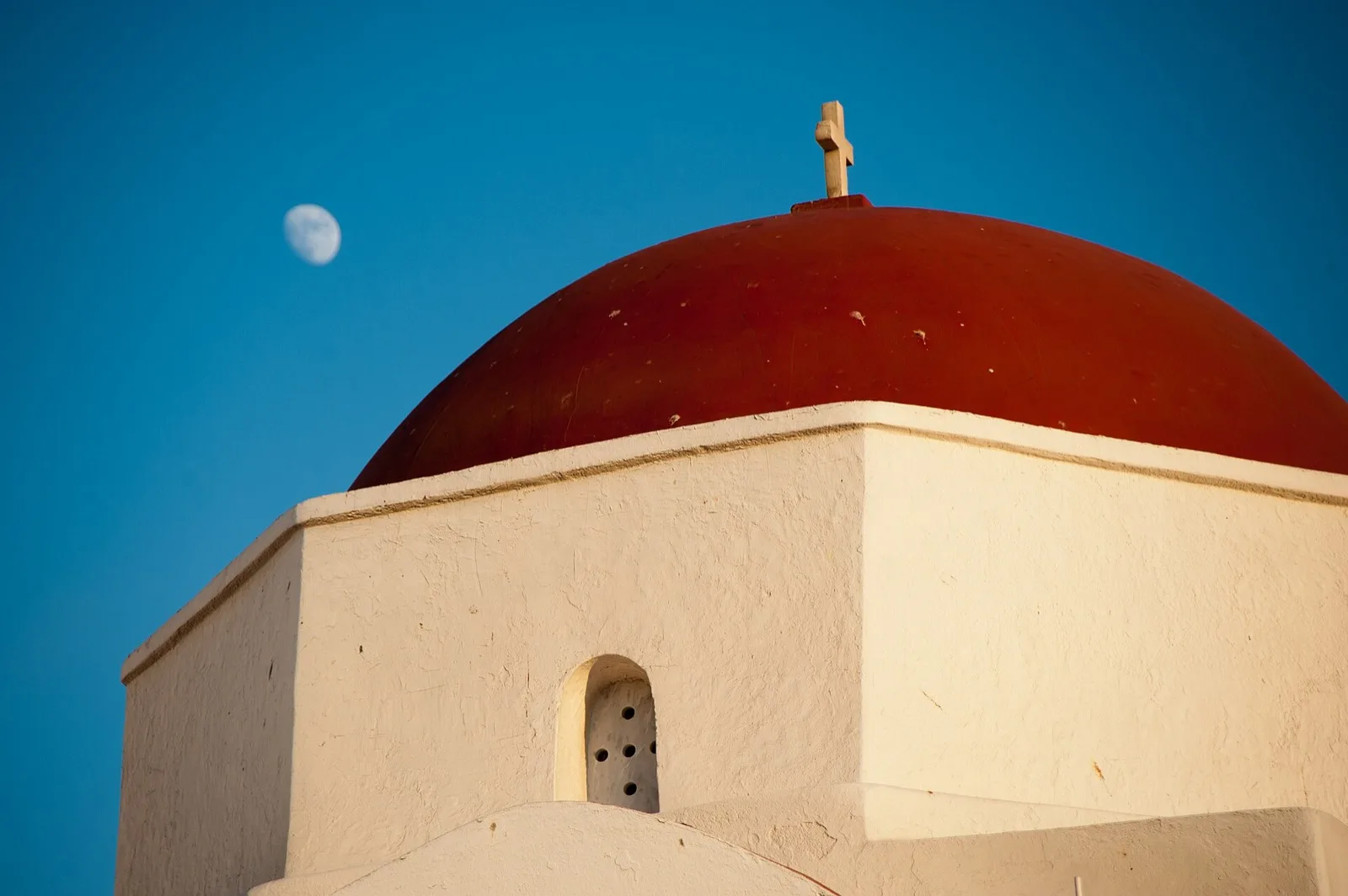
Religious feast days fill Ano Mera and village churches with locals; visitors are welcome if they dress respectfully and keep voices low during services.
Churches and monasteries
Cover shoulders and knees, speak quietly, and ask before photographing services. Panagia Tourliani in Ano Mera is a working monastery.
On the beach
Topless sunbathing is common on many beaches; nudity is customary only in a few spots. Cover up when you leave the sand — swimwear in Chora's lanes and shops is frowned upon.
Quiet hours
Residents live above the bars. Keep voices down in the lanes after midnight, especially in the Kastro.
Public holidays
1 & 6 January, Clean Monday, 25 March, Orthodox Easter (2 May 2027), 1 May, Pentecost Monday, 15 August, 28 October, 25–26 December. Banks and many shops close; museums may shorten hours.
Twelve words that earn goodwill
English is spoken everywhere visitors go, but a few Greek words are always appreciated: kaliméra (dobro jutro), kalispéra (dobro veče), efcharistó (thank you), parakaló (please / you're welcome), ne (yes — confusingly), óchi (no), signómi (sorry / excuse me), yiá sas (hello, polite), póso káni? (how much?), to logariasmó (the bill), neró (water) and stin ygeiá mas (cheers).
Praktična pitanja
What is the emergency number in Mykonos?
Call 112 for any emergency — it is free, works from any phone and the operators speak English. The direct lines are 100 for police, 166 for ambulance, 199 for fire and 108 for the coast guard. The Tourist Police are on 1571, and the Mykonos Health Center on +30 22893 60000.
Can you drink tap water in Mykonos?
It is not recommended. Much of the island's water comes from desalination and quality varies by building, so most hotels advise drinking bottled water. Use tap water for brushing teeth only if your hotel confirms it is fine, and carry a refillable bottle on hot days.
Da li mi je potreban keš u Mykonos?
A little. Cards and contactless work almost everywhere in Chora, but keep €20–50 in small notes for bus tickets bought from the driver, kiosks, small cafés and village tavernas. ATMs are in Chora, at the airport and near the main beaches; always choose to be charged in euros.
Is Mykonos safe for tourists?
Yes, generally. The main risks are practical: ATV and scooter accidents on narrow roads, overcharging in bars and beach clubs, petty theft in crowds and strong wind at sea. Wear a helmet, read every bill, keep valuables close and call 112 or the Tourist Police (1571) if anything goes wrong.