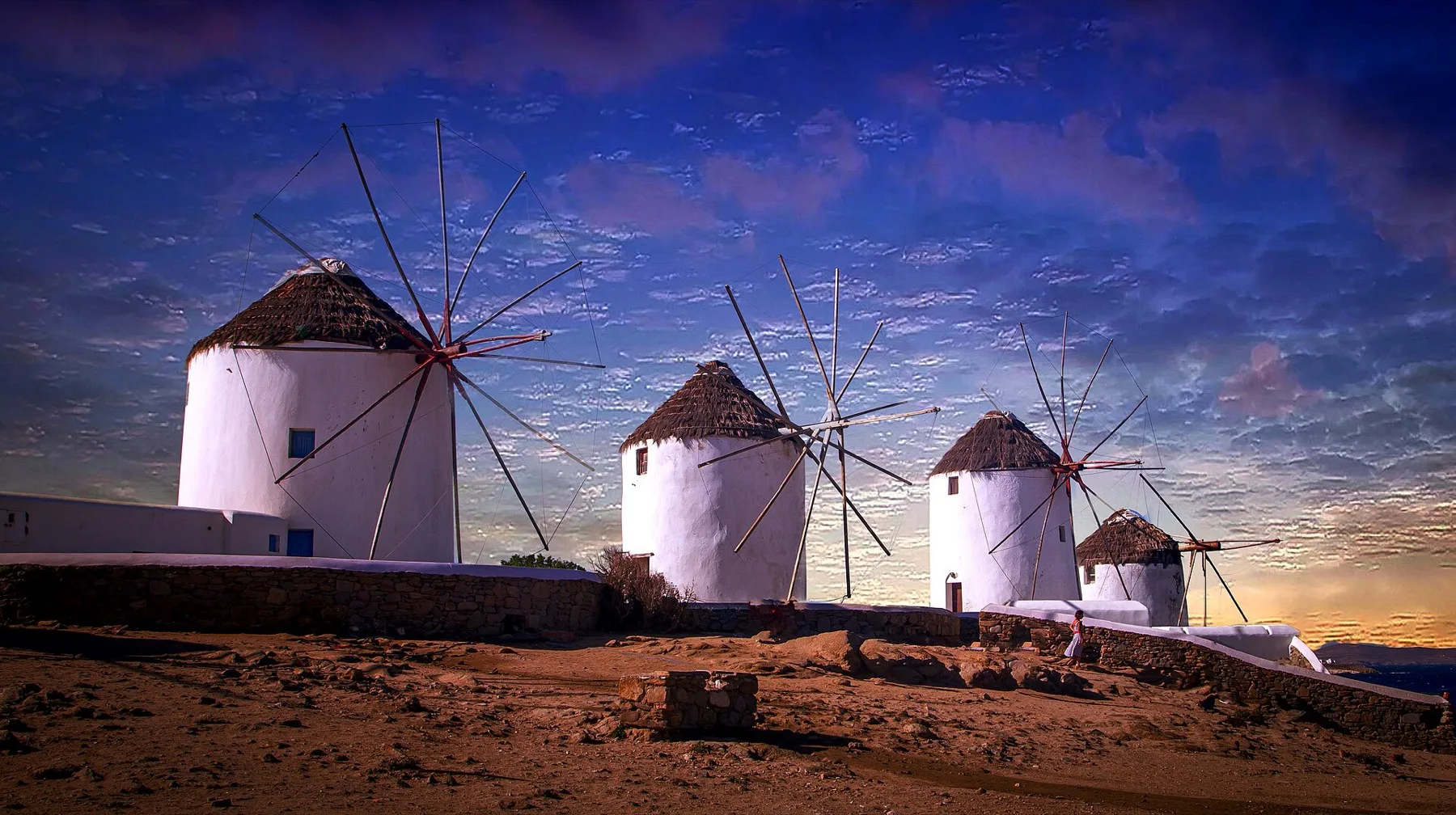
Golden hour on the ridge
Arrive 40 minutes before sunset to get a spot. The sun sets over the sea to the west, lighting the mills from the side.
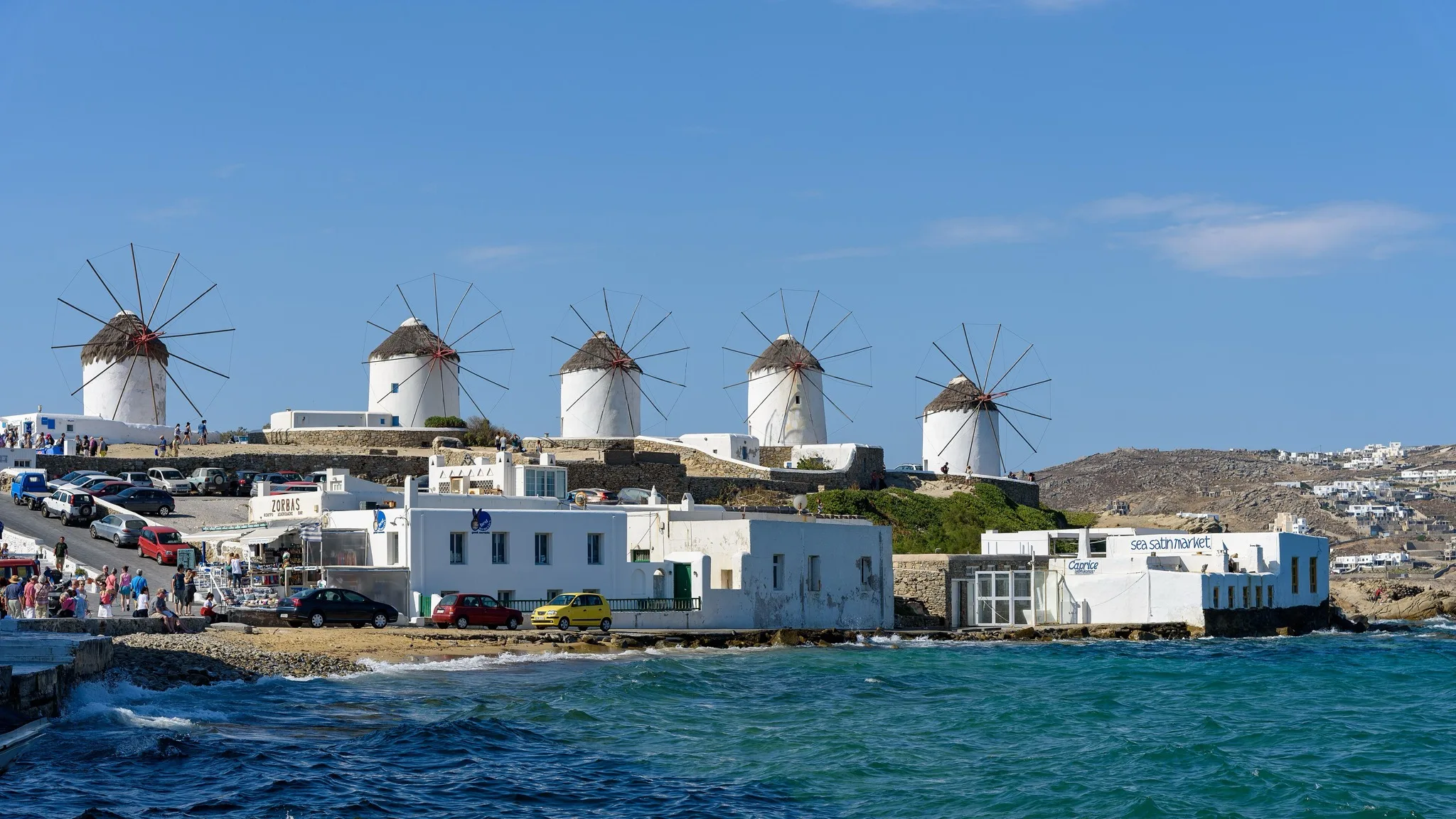
مجانية ومفتوحة في كل الأوقات وعلى بعد خمس دقائق من البندقية الصغيرة — التاريخ والضوء وأفضل الزوايا.
The Kato Mili windmills stand on the ridge above Little Venice, a few minutes' walk from the centre of Chora. You see them from outside, so they are free and open at all hours (visitgreece.gr, checked Oct 2026). Go about 40 minutes before sunset, or at sunrise for an empty ridge.
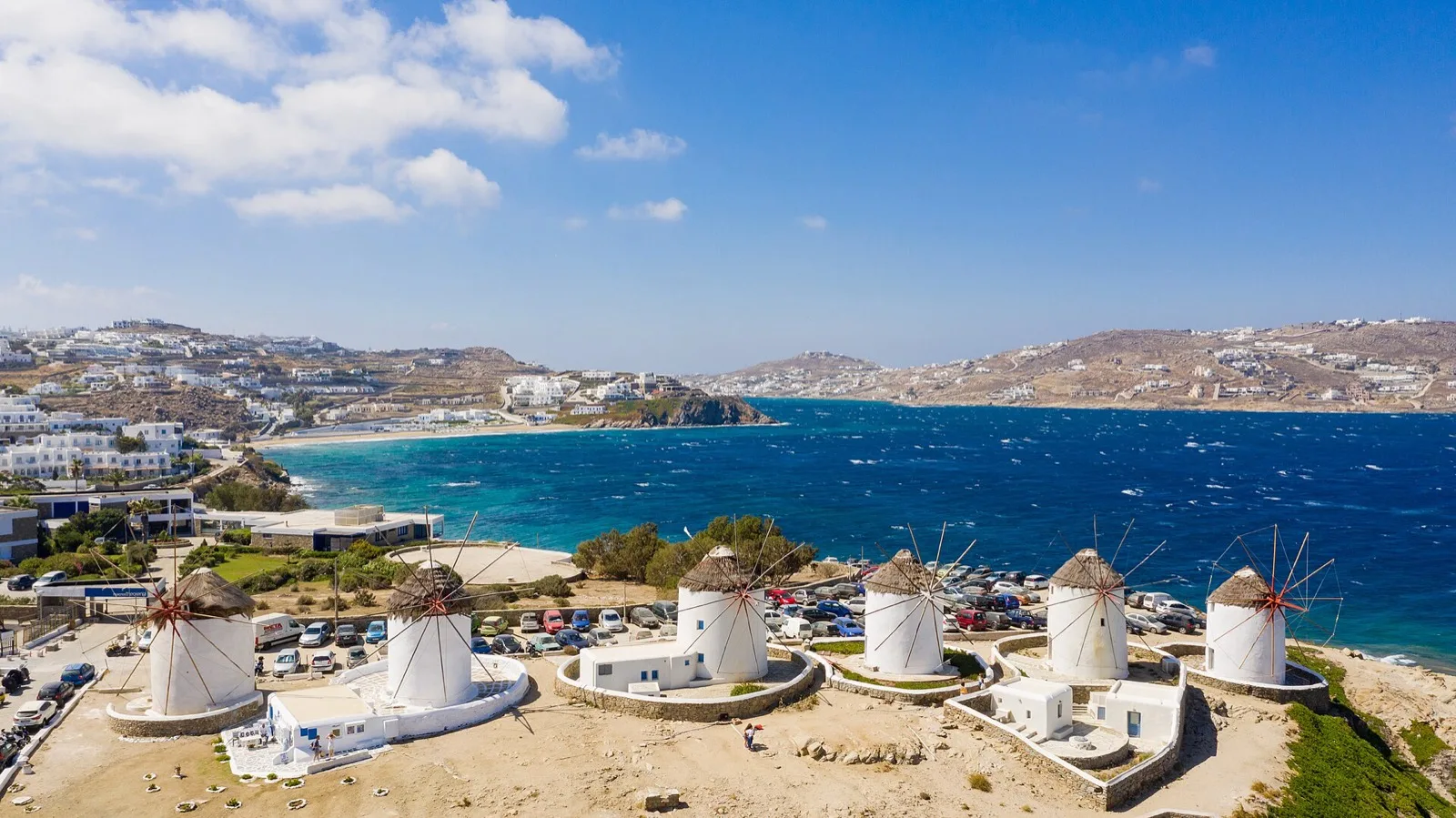
Mykonos sat on the sea route through the Cyclades and had something every passing ship needed: wind. From the Venetian period in the 16th century, islanders built windmills to grind wheat and barley into flour, which bakers turned into hard paximadia — rusks that kept for months in a ship's hold.
At their peak there were around 25–28 windmills on the island. Ten formed the Kato Mili group, the "lower mills", on the ridge facing the prevailing north wind. Milling ended in the 20th century; today about 16 old mills survive around Mykonos, seven of them at Kato Mili (greekreporter.com; mykonos.travelfind.gr).
Arrive 40 minutes before sunset to get a spot. The sun sets over the sea to the west, lighting the mills from the side.

The waterfront below gives the famous view of mills above houses above sea. Best from the far end of the bay.
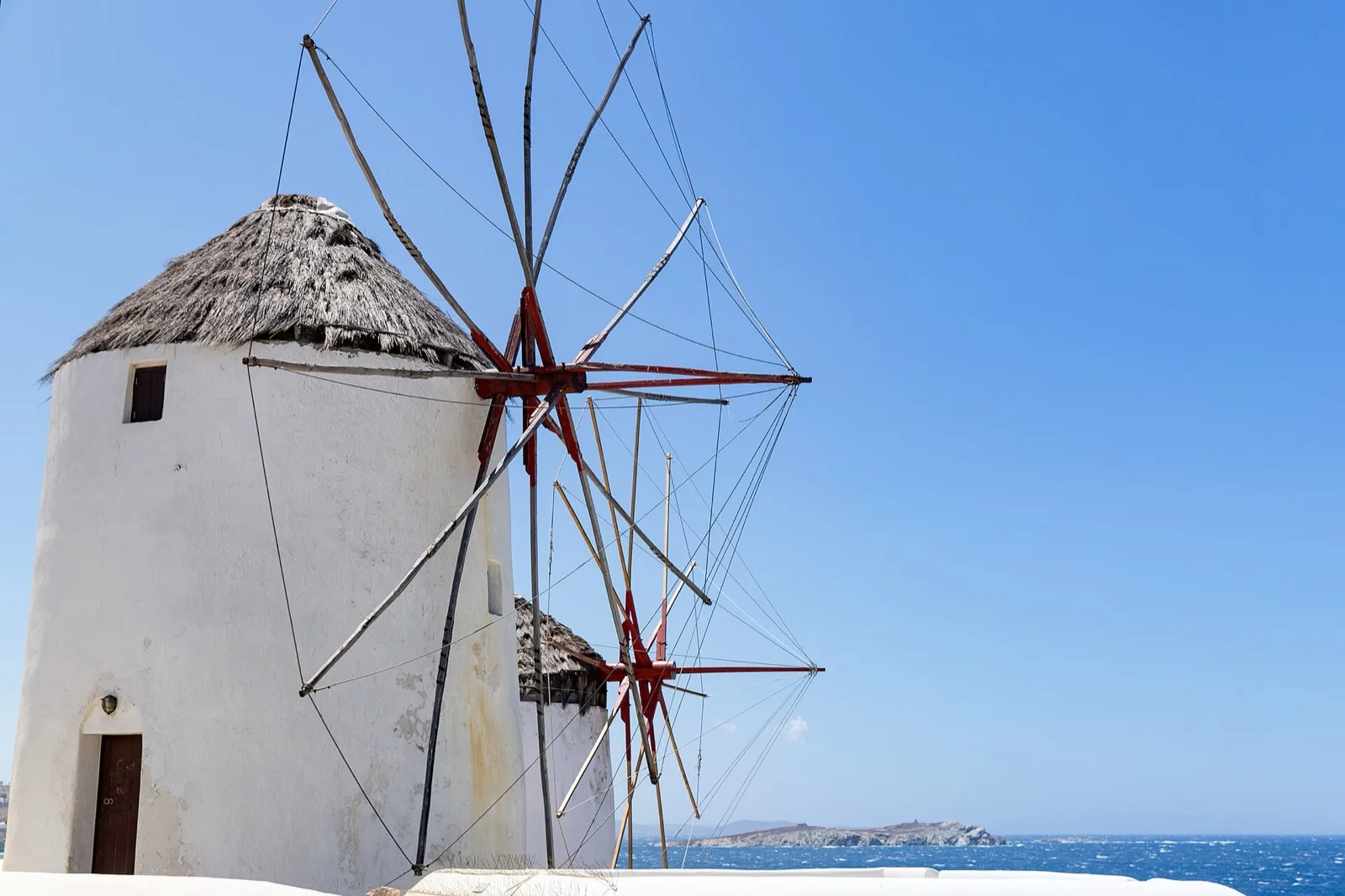
Up close in morning light: wooden spokes, whitewash and blue sky with nobody else in frame.
Almost empty, soft light from behind Chora, and the lanes of Little Venice still quiet.
Twenty minutes after sunset, the lights of Little Venice come on below the white mills.
Harsh light and no shade — skip it for photos and come back later.

Pair it with Little Venice and Paraportiani in one loop, or walk 10 minutes south to Megali Ammos for a swim.

Drop 150 m from the ridge to the waterfront bars for a drink as the light fades.
Sunset drinks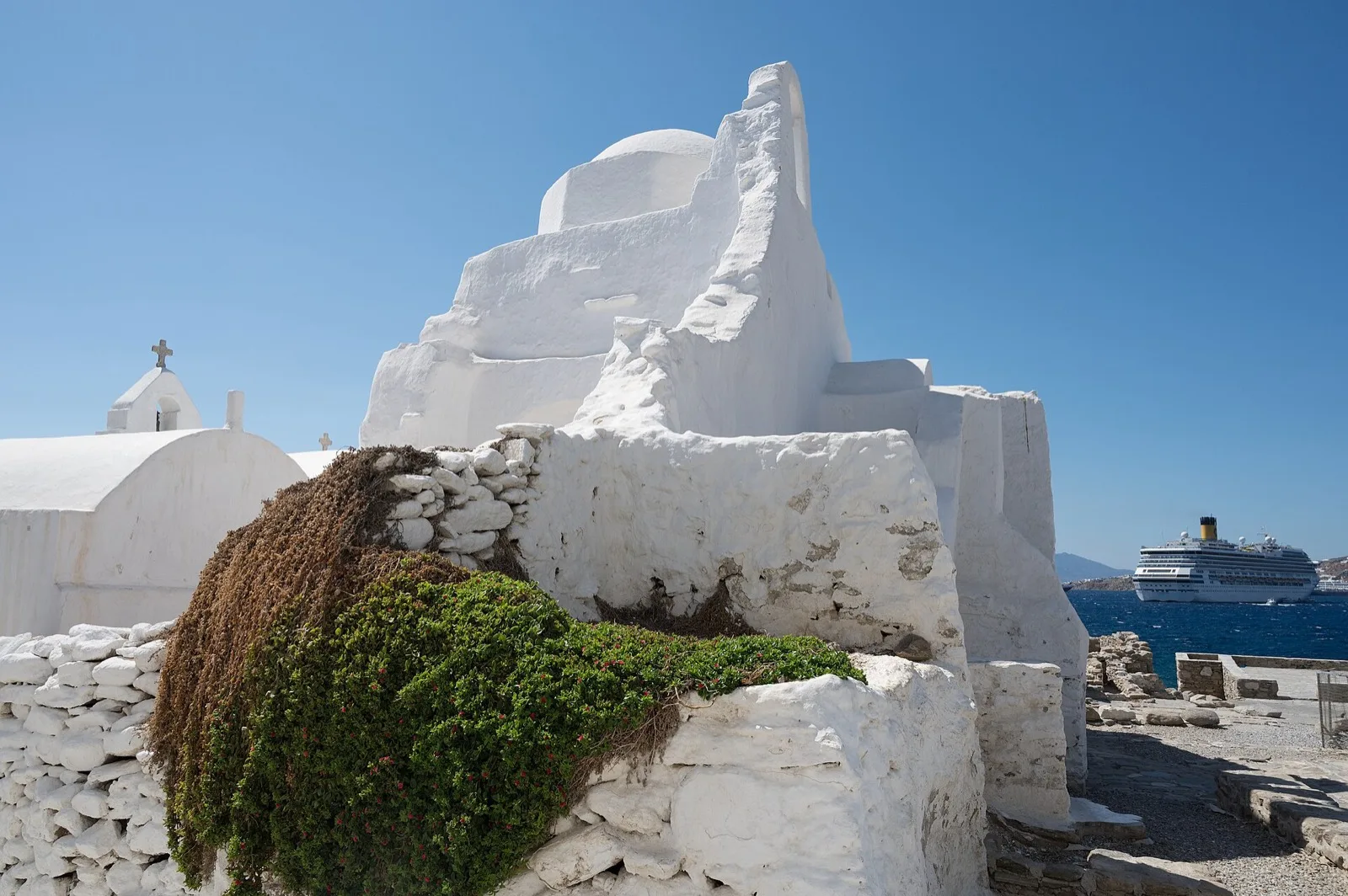
A further 150 m along the water: the most photographed church in the Cyclades, begun in 1425.
Five chapels in one
The restored mill on the hill above town, now a small agricultural museum with a view.
Inside a millThe mills are private property. Do not open doors, climb steps marked private or lean on window frames for photos.
The low stone walls are old and the drop behind some is steep. Take the photo from the path, not from the wall.
EU drone rules apply in Greece: most camera drones must be registered and may not fly over crowds. The ridge is busy at sunset — leave the drone in the bag.
Not at Kato Mili — the mills there are private or closed, and you visit the ridge outside them for free. To see how a mill works, visit Boni's windmill on the hill above Chora, which houses a small agricultural museum. Check opening hours locally; they are seasonal.
About 40 minutes before sunset, when the light is warm and the sun sets over the sea to the west — but that is also the busiest time. For an empty ridge, come at sunrise. Twenty minutes after sunset, the blue hour lights up Little Venice below the mills.
The first were built under Venetian rule in the 16th century, and more followed over the next centuries. They ground grain into flour for ships' rusks. Milling stopped in the 20th century; about 16 old mills survive on the island, seven of them in the Kato Mili row above Little Venice.
Yes. There is no gate or ticket: you walk up to the ridge and visit from outside at any hour (visitgreece.gr, checked Oct 2026). The only cost is a drink if you sit in one of the Little Venice bars below to watch the sunset.